Allergen labels for commercial kitchens
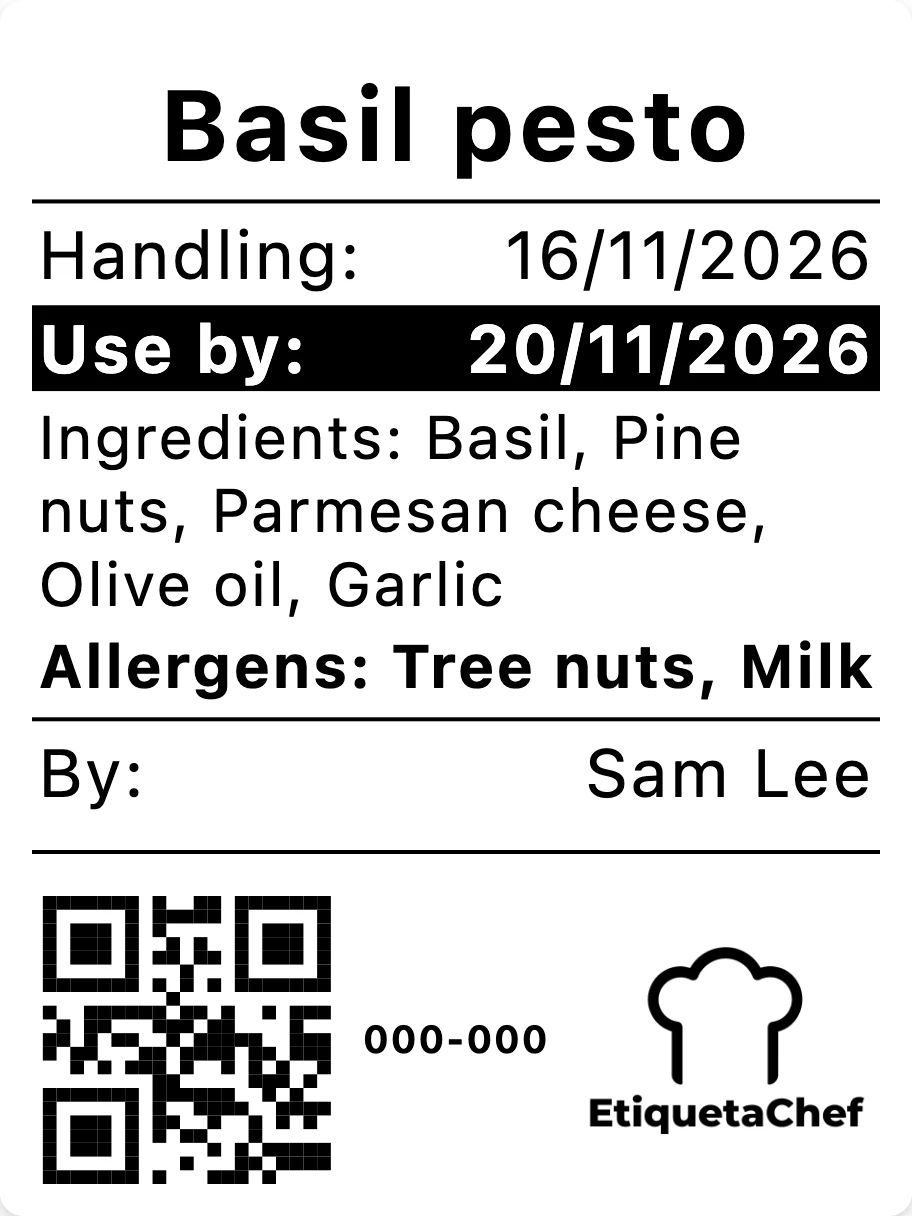
An allergen label in a commercial kitchen tells anyone who picks up a container which allergens are inside: the product name, the ingredients with the allergens in bold, the use-by date and who prepared it. It follows your country’s legal list — the EU 14 or the US Big 9. EtiquetaChef prints it from your phone, with the allergens taken from the product, never typed again.
What an allergen label must show
Once a product leaves its original pack, the manufacturer’s allergen declaration is gone. The kitchen label becomes the only record on the container.
- Product name The name the team uses, so nobody guesses what is in the pan.
- Ingredients The full list, so allergens hidden in sub-recipes — the pesto, the stock, the dressing — are visible.
- Allergens highlighted In bold, from the legal list of your country, so they stand out from the rest of the text.
- Use-by date The same label controls shelf life: one label per container, not two.
- Who prepared it Who to ask when the front of house has a question from a guest.
Which allergens go on the label
Each country has a legal list. The app ships the template for yours and prints the names exactly as below.
EU 14
Regulation (EU) 1169/2011, Annex II
European Union, UK, Switzerland, Norway, Iceland, Liechtenstein
- Gluten
- Crustaceans
- Egg
- Fish
- Peanut
- Soy
- Milk
- Tree nuts
- Celery
- Mustard
- Sesame
- Sulphites
- Lupin
- Molluscs
US Big 9
FALCPA 2004 + FASTER Act 2021
United States
- Milk
- Egg
- Fish
- Crustaceans
- Tree nuts
- Peanut
- Wheat
- Soy
- Sesame
Brazil
ANVISA RDC 727/2022
Brazil
- Wheat
- Gluten
- Crustaceans
- Egg
- Fish
- Peanut
- Soy
- Milk
- Lactose
- Tree nuts
- Natural latex
In the EU and the UK, allergen information is mandatory for non-prepacked food too — what a restaurant serves. In the US, the Big 9 law covers packaged food; where a state has adopted the 2022 FDA Food Code, restaurants must also tell customers in writing about the major allergens in what they serve. Check what your local authority asks for.
Real allergen labels, by country
Generated by the EtiquetaChef app itself — the same label your printer will produce.
-
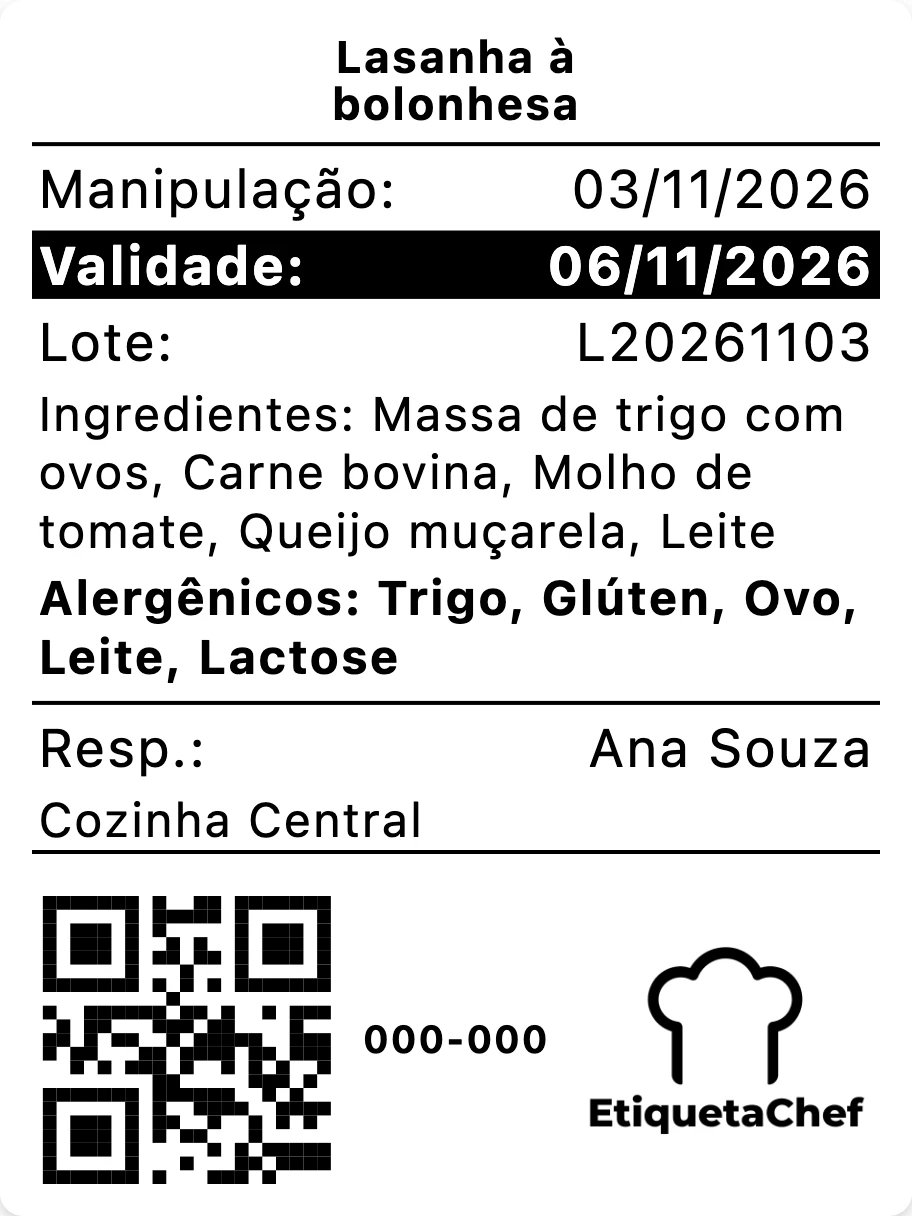
Brazil -
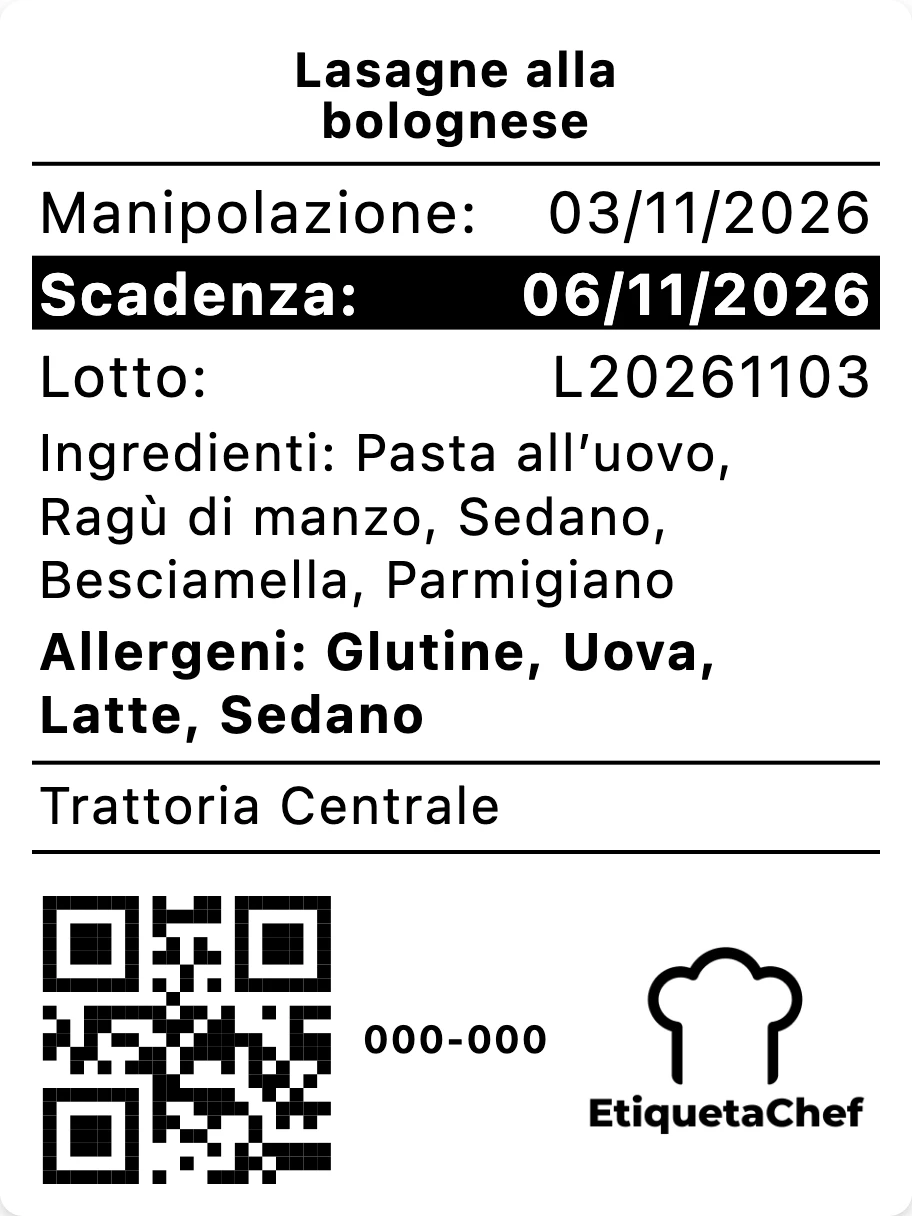
Italy (European Union) -
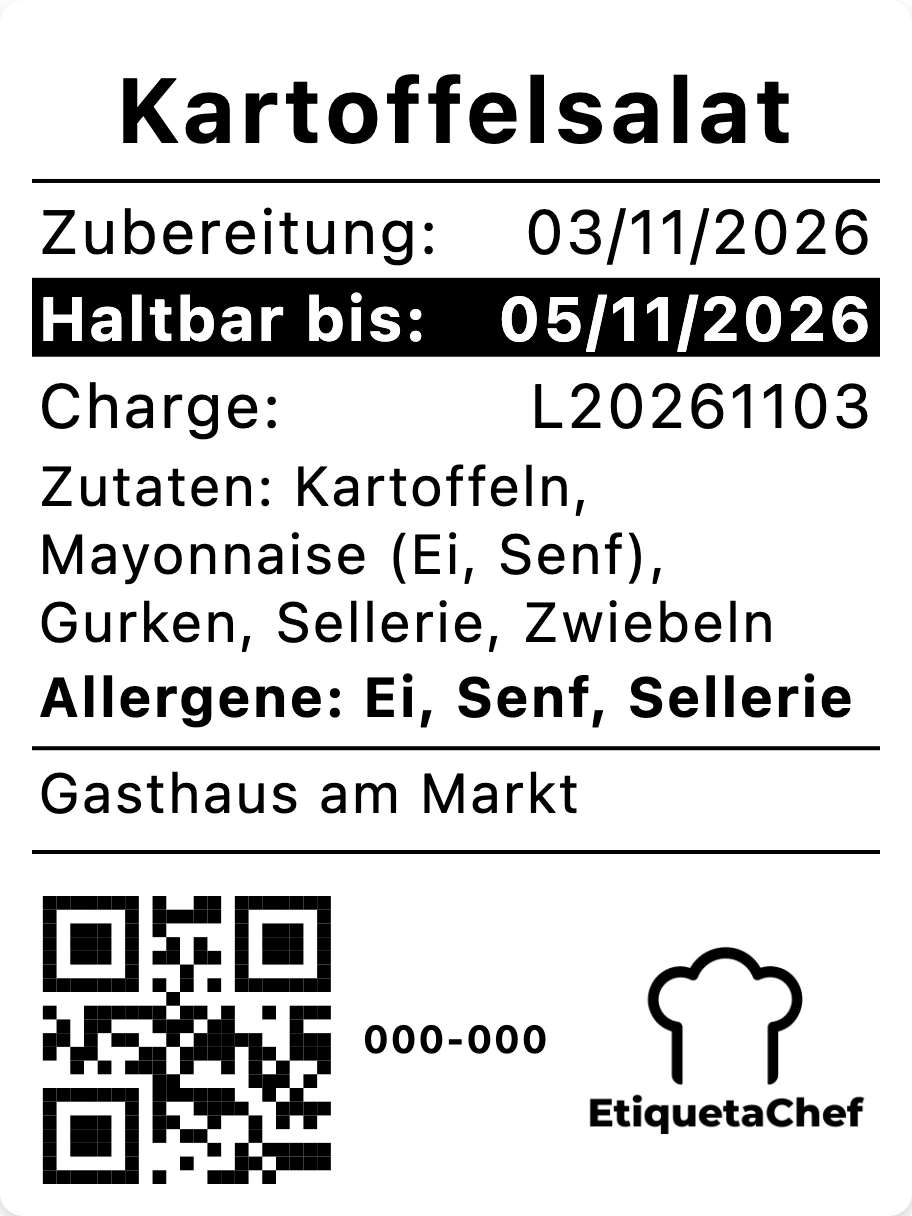
Germany (European Union) -
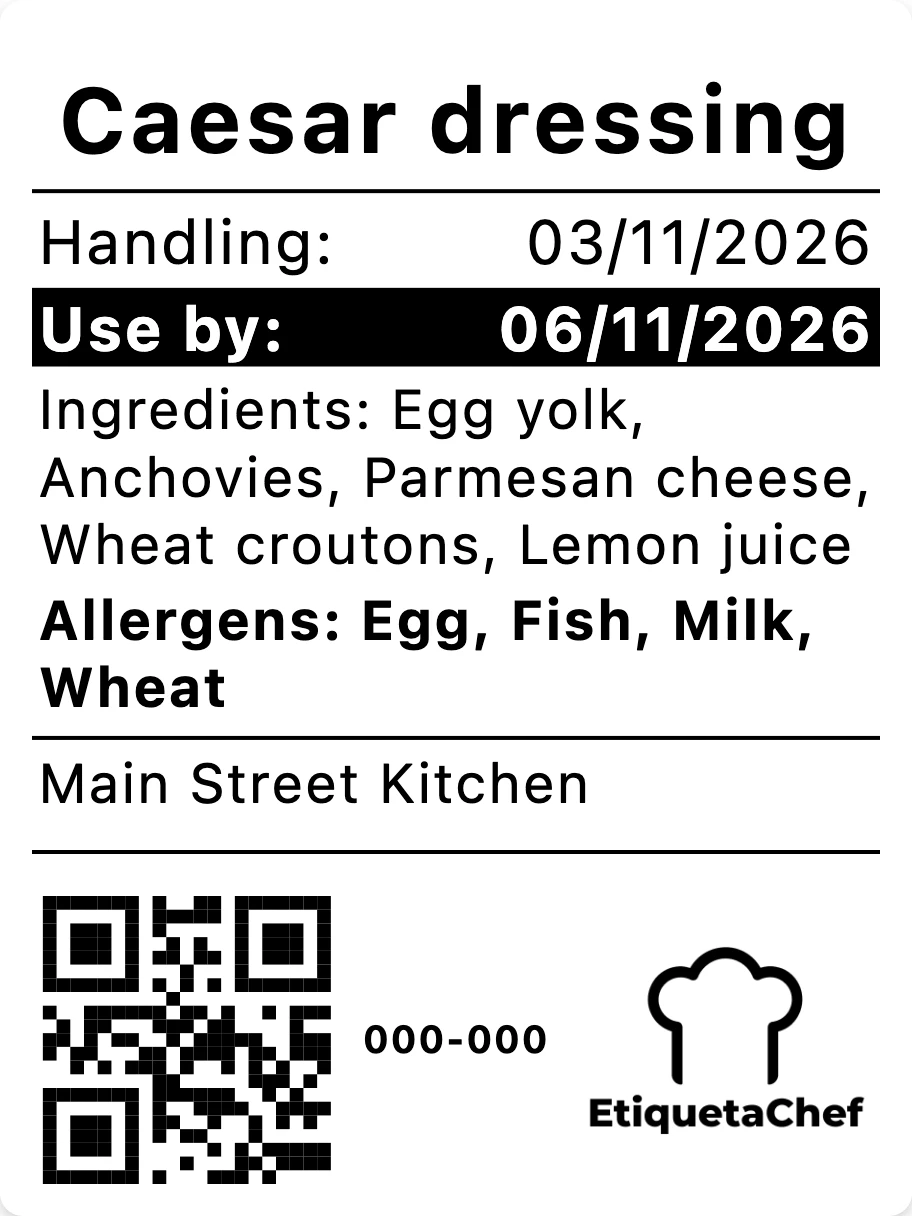
United States
Purple allergen labels: convention, not law
In the US, the UK and Australia, purple is the colour many kitchens use for allergen-free tools and labels. It helps, but no law requires it, and a colour says nothing about which allergen is present. What protects a guest is the allergen written on the label.
Cross-contact: what the label cannot do
A label records what is in the food. Cross-contact — traces that reach a dish through shared tools — is controlled by the process:
- Separate boards, knives and containers for allergen-free preps, stored apart.
- Allergen-free food prepared first, before the rest of the line.
- Shared fryer oil treated as a source of the allergens it has cooked.
- Staff trained to read the label before plating, not after.
How EtiquetaChef prints allergen labels
-
Register the allergens once
In the product: ingredients and allergens from your country’s list.
-
Print at the station
Pick the product on the phone or tablet; the label comes out over Bluetooth with the allergens in bold.
-
Change the recipe, change every label
Edit the product once and every new label prints the new list.
-
Grab-and-go mode
For food packed for direct sale, the allergen goes in bold inside the ingredient list, as Natasha’s Law asks.
Common allergen labelling mistakes
- Allergen information that lives only in the recipe binder or in the chef’s head.
- Colour stickers with no words: nobody remembers what each colour meant.
- Forgetting sub-recipes: the dressing still carries mustard when it goes into a salad.
- Changing a supplier or a recipe and keeping the old labels.
Read next
Allergen labels: frequently asked questions
Do commercial kitchens need allergen labels?
In the EU and the UK, allergen information is mandatory for all food served, prepacked or not, and labelling containers is the practical way to keep it. In the US the rules vary by state and health department. In every country, a labelled container is what keeps the information from getting lost.
What are the 14 allergens in the EU and the UK?
Cereals containing gluten, crustaceans, eggs, fish, peanuts, soybeans, milk, tree nuts, celery, mustard, sesame, sulphites, lupin and molluscs.
What are the Big 9 allergens in the US?
Milk, eggs, fish, crustacean shellfish, tree nuts, peanuts, wheat, soybeans and sesame. Sesame was added by the FASTER Act and applies from 2023.
Do allergen labels have to be purple?
No. Purple is a common convention for allergen-free tools and labels, not a legal requirement. The allergen written on the label is what matters.
Can EtiquetaChef print “may contain” warnings?
EtiquetaChef prints the allergens registered in the product. Cross-contact is controlled by separation, cleaning and training, and should be part of your food safety plan.
What is the QR code on the label for?
It is for the team: scanning it in the app marks the label as used or discarded and keeps the history. It is not a page for guests.
Print allergen labels in seconds
Register the allergens once and every label prints them in bold, with the use-by date calculated. Talk to a consultant or download the app.